
Child Daycare Safety Tips for Parents Choosing a Secure Center
Choosing a daycare is one of the first big trust decisions many families make. A warm classroom and friendly staff matter, but safety is what makes everything else possible. Children need spaces where they can explore, play, rest, eat, and build relationships with steady adults who know how to prevent problems and respond quickly when something goes wrong.
Strong daycare safety does not mean a center feels tense or overly strict. In a well-run program, safety often looks calm and ordinary. Teachers count children before moving rooms. Toys are clean and age-appropriate. Doors are secure. Staff know allergy plans. Parents get clear updates. Children learn simple routines, like washing hands and staying with the group.
The goal is not to find a perfect center with zero risk. Children will fall, bump knees, and catch colds. The goal is to choose a center that takes safety seriously every day, has clear systems, and communicates openly with families.

Staff training and qualifications set the tone for safety
The adults in the room are the most important safety feature in any daycare. Clean floors and secure doors help, but trained staff make hundreds of small safety decisions throughout the day.
A center should be able to explain how it hires, screens, and trains staff. Many states require childcare workers to complete background checks and meet basic training standards. Requirements vary by state, so parents should ask what applies locally and what the center does beyond the minimum.
Look for staff who have training in:
CPR and first aid
At least some staff on-site should be currently trained to respond to choking, breathing problems, injuries, and other urgent situations.
Child development
Teachers who understand typical behavior by age can set up safer activities and respond calmly to big feelings.
Safe sleep practices
Infant rooms should follow recognized safe sleep guidance, including placing babies on their backs in uncluttered cribs.
Medication and allergy procedures
Staff should know how to store medication, follow written instructions, and respond to allergic reactions when applicable.
Positive behavior guidance
Safe care includes emotional safety. Staff should use respectful, age-appropriate ways to guide children.
Qualifications matter, but daily practice matters just as much. During a tour, watch how teachers interact with children. Do they get down to a child’s level? Do they notice when a toddler climbs too high? Do they speak warmly even when redirecting behavior?
A safe center does not rely on one excellent teacher. It builds a team culture where every staff member knows the rules, follows them, and feels responsible for every child.
Ask about staff-to-child ratios
Staff-to-child ratios affect supervision. When teachers care for too many children at once, it is harder to prevent injuries, handle bathroom needs, notice illness, or comfort a child who feels overwhelmed.
Parents can ask:
How many children are assigned to each teacher?
Do ratios change during drop-off, pickup, lunch, outdoor play, or nap time?
What happens when a teacher is sick or on break?
Are substitutes trained in the center’s safety procedures?
The answer should feel clear, not vague. A director who can explain coverage plans usually has a stronger handle on safety.
Emergency procedures should be practiced, not just written down
Every daycare should have emergency plans. The real question is whether staff know those plans well enough to act quickly.
Emergencies can include fires, severe weather, power outages, medical events, nearby safety threats, or the need to relocate children. A center should have written procedures, posted exits, emergency contacts, and supplies ready. Staff should run regular drills so children and teachers know what to do.
For young children, drills should feel calm and simple. Teachers might say, “We are practicing how to leave the building safely,” or “We are going to sit together in our safe spot.” Repetition helps children build confidence instead of fear.
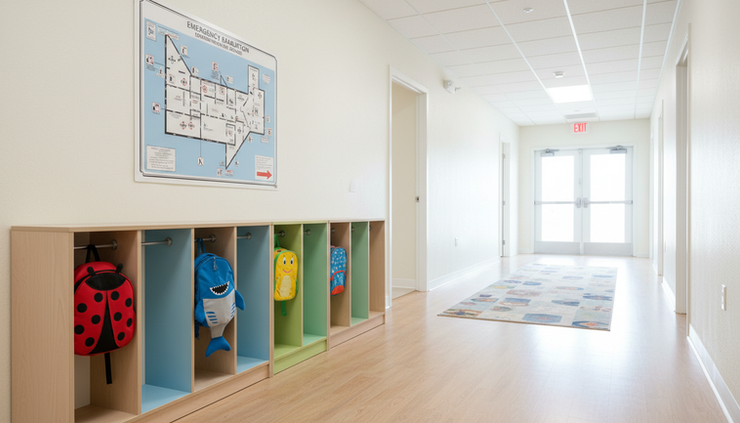
What parents can ask about emergency readiness
A good center should welcome safety questions. Try asking:
Parent question | What a reassuring answer includes |
How often do you practice fire and emergency drills? | A regular drill schedule and age-appropriate practice |
Where do children go during severe weather? | A specific safe area inside the building |
How do you contact parents during an emergency? | More than one method, such as phone, text, email, or app |
What if parents cannot arrive quickly? | A plan for continued care until authorized pickup |
How do you handle medical emergencies? | CPR and first aid training, emergency contacts, and clear documentation |
Pick-up security belongs in this category too. Centers should release children only to authorized adults. Staff should check identification when needed, especially when a new person arrives for pickup. Entry doors should be monitored or secured, and visitors should sign in.
Safe play environments help children explore with confidence
Play is how children learn. A safe daycare does not remove all challenge from play, but it matches activities and equipment to each child’s age and ability.
Indoor spaces should be clean, organized, and easy to supervise. Furniture should be stable. Shelves should not tip. Small choking hazards should stay out of infant and toddler rooms. Art materials should be non-toxic and age-appropriate. Electrical outlets should be covered where needed, and cleaning supplies should be locked away.
Outdoor spaces need the same careful attention. Playgrounds should have soft surfaces under climbing equipment and swings. Fences should be secure. Gates should latch properly. Staff should scan for hazards before children go outside, including broken equipment, sharp objects, animal waste, standing water, or extreme heat.
What safe supervision looks like
Supervision is active. That means staff are watching, listening, moving, and anticipating.
In a strong daycare setting, teachers:
Position themselves where they can see children clearly
Count children during transitions
Stay close during climbing, water play, and mealtimes
Redirect unsafe behavior before it grows
Avoid distractions during supervision
Adjust activities when children become tired, crowded, or overstimulated
Parents can learn a lot by watching transitions. Moving from classroom to playground, bathroom to lunch, or nap to pickup can be stressful. A safe center has routines that keep children accounted for during these busy moments.
Age-appropriate equipment matters
A play structure that works for preschoolers may be unsafe for toddlers. Infant rooms should have open floor space for safe movement, not small objects or heavy toys. Toddlers need sturdy items they can push, climb, and carry without serious risk. Preschoolers benefit from more complex materials, but they still need clear limits and supervision.
Ask how the center separates age groups during play. Mixed-age moments can be lovely, but staff should plan them with care so younger children do not get crowded or knocked over.
Health and hygiene practices reduce everyday risks
Health routines protect children, staff, and families. Young children share toys, touch faces, and learn hygiene slowly, so centers need consistent systems.
Start with handwashing. Staff and children should wash hands after diaper changes, bathroom use, outdoor play, messy activities, and before meals. Hand sanitizer can help in some settings, but it should not replace proper handwashing when soap and water are available.
Diapering and toileting spaces should be separate from food preparation areas. Staff should use gloves when appropriate, clean surfaces between children, and wash hands after each change. Food surfaces should be wiped and sanitized before meals.

Food safety and allergy care need clear systems
Meals and snacks bring extra safety concerns. Centers should store food properly, follow family instructions, and prevent choking risks. For younger children, foods should be cut to safe sizes based on age and development.
Allergy management should be specific. If a child has a known allergy, staff should have written instructions and know where emergency medication is stored if prescribed. The center should also explain how it prevents food sharing and cross-contact during meals.
Ask the director how allergy information is shared with staff while still respecting privacy. A thoughtful answer shows the center takes the issue seriously without treating a child as a problem.
Illness policies should be practical and clear
Children get sick. A good illness policy helps families know when a child should stay home and when they can return. The policy should cover fever, vomiting, diarrhea, contagious illnesses, rashes, and other common concerns.
Parents should look for consistency. If the policy exists only on paper but sick children often remain in class, germs can spread quickly. At the same time, policies should be realistic and based on public health guidance, not guesswork.
For medical questions, families should follow advice from their pediatrician and local health department. Daycare policies support safety, but they do not replace medical care.
Communication with parents is part of the safety system
Parents are not in the classroom all day, so communication fills the gap. A safe center keeps families informed before small concerns become big problems.
Good communication can include:
Daily reports for infants and toddlers
Notes about meals, naps, diapers, and mood
Prompt injury reports, even for minor bumps
Updates about contagious illness exposure
Clear reminders about supplies, medications, or clothing
Regular conversations about behavior, development, and routines
The best communication feels honest, not polished. A center should tell parents about accidents, conflicts, or concerns in a calm and factual way. If a child falls on the playground, parents should hear what happened, who was present, what care was given, and how the child responded.
Parents also have a role in safety
Daycare safety works best when families and staff share information. Parents can help by keeping emergency contacts updated, labeling belongings, sharing medical needs, and telling teachers about changes at home that may affect a child’s day.
For example, a child who slept poorly may be more prone to falls or meltdowns. A child starting a new medication may need closer observation. A family change, travel schedule, or stressful morning can affect behavior. These details help teachers respond with more care.
Parental involvement does not mean hovering. It means building a respectful partnership where questions are welcome and safety stays visible.
Practical ways to assess daycare safety during a visit
A tour is more than a chance to see the classrooms. It is a chance to notice how the center works when real children are present.
Before visiting, make a short list of priorities. Bring questions, but also pay attention to how staff respond. Do they seem open and patient? Do they answer directly? Do they avoid rushing through safety topics?
Watch the room before asking questions
Spend a few quiet minutes observing. Look for signs of safe routines:
Teachers can see the children, not just hear them
Children seem comfortable approaching staff
Cleaning supplies, medications, and adult items are out of reach
Toys look clean and in good repair
Floors are clear enough for safe movement
Staff count children during transitions
Doors and gates close securely
Infants sleep in safe, uncluttered spaces
Also notice the emotional climate. Children do not need to be silent for a room to be safe. Laughter, chatter, and movement are normal. What matters is whether adults respond calmly and stay engaged.
Review documents without feeling awkward
It is reasonable to ask about licensing, inspection history, staff training, emergency plans, and illness policies. A responsible center expects these questions.
Parents can request or review:
The parent handbook
Emergency contact procedures
Medication forms
Allergy plans
Incident report process
Pick-up authorization policy
Discipline or behavior guidance policy
Cleaning and sanitation routines
If a center becomes defensive when asked basic safety questions, treat that as useful information. Trust grows when a provider is transparent.
Trust patterns, not one perfect moment
Every daycare has busy days. A classroom may have a spill on the floor or a crying child at pickup. One imperfect moment does not always mean a center is unsafe.
Look for patterns. Are staff attentive? Are hazards handled quickly? Are children treated with respect? Does the director know what is happening in the classrooms? Do policies match what you see?
A secure center usually feels steady. Staff know the children. Routines are clear. Problems are addressed, not ignored.

A simple daycare safety checklist for parents
Use this checklist after each tour while the visit is still fresh.
Staff and supervision
Staff are trained in CPR and first aid
Ratios seem appropriate and consistent
Teachers actively watch and engage with children
Background checks and hiring practices are explained
Emergency readiness
Fire and safety drills happen regularly
Emergency exits and plans are clear
Parent contact methods are current
Pick-up rules are strict and consistent
Environment and equipment
Toys and furniture match children’s ages
Outdoor play areas are fenced and maintained
Small objects stay away from infants and toddlers
Cleaning supplies and medications are locked away
Health and hygiene
Handwashing routines are visible
Diapering and food areas are separate
Illness policies are clear
Allergy and medication plans are specific
Communication and trust
Staff share daily updates
Incident reports are clear and timely
Parents are welcome to ask questions
The director communicates openly
Safety is not one policy, one locked door, or one certificate on the wall. It is the daily habit of paying attention. When a center trains its staff well, practices emergency plans, maintains clean and age-appropriate spaces, and keeps parents informed, children can settle in and thrive.
The right daycare should leave families feeling informed, respected, and reassured. Ask direct questions. Watch how the day runs. Trust your observations. A secure center will not expect blind trust. It will help earn it, one safe routine at a time.


Comments